
EUFRAS General Assembly 2026: Knowledge, Innovation, AI and the Future of Agricultural Advisory in Agriculture
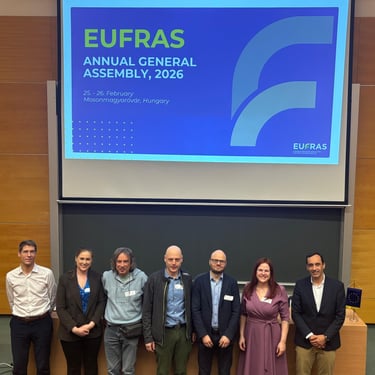
The annual EUFRAS General Assembly 2026 brought together members and professionals from the advisory, research and innovation sectors to discuss the future of agriculture at a time when artificial intelligence, digitalization and new forms of knowledge transfer are rapidly transforming the industry.
EUFRAS GENERAL ASSEMBLY
2/27/20263 min read
Day 1 of the Assembly – AI, AKIS and the Future of Advisory Services
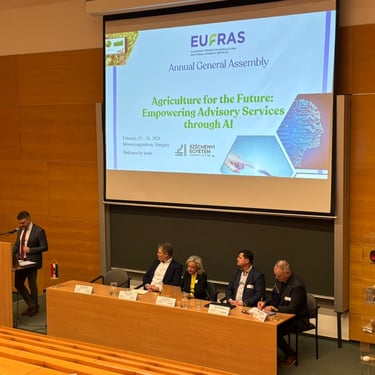
The event took place at Széchenyi István University in Mosonmagyaróvár, Hungary. The opening was delivered by the representative of the host organisation, Dr. András Ver, who introduced the venue, the program and this year’s “hot topic” — “Agriculture for the Future: Empowering Advisory Services through AI”.
The official opening of the General Assembly was continued with a warm and informal address by Rui Almeida, (Chairman of the EUFRAS Board). He thanked the host organization and emphasized the growing importance of the advisory sector in an era when the impact of artificial intelligence is becoming increasingly pronounced. Rui also raised the provocative but essential question: “Will AI shape advisors, or will advisors shape AI?”, highlighting the need to invest in advisors’ AI literacy, youth engagement and the development of advisory professionals’ competences, particularly through initiatives such as YoungEUFRAS.
A welcome speech was also delivered by Dr. István Nagy (Hungarian Minister of Agriculture), who emphasised that agricultural development must continue to seek new forms of cooperation between education, innovation and farmers. Research shows that trust in the sector is still built through direct, long-term relationships — technology alone cannot replace critical thinking and human connections. In this context, EUFRAS plays an important role in promoting good practice and knowledge exchange.
The opening session was concluded by Dr. Tamas Toth, (Dean of the Faculty of Agricultural and Food Sciences), who presented the university’s strategic development and research profile, and expressed pride in the university’s role as one of the founding partners of EUFRAS.
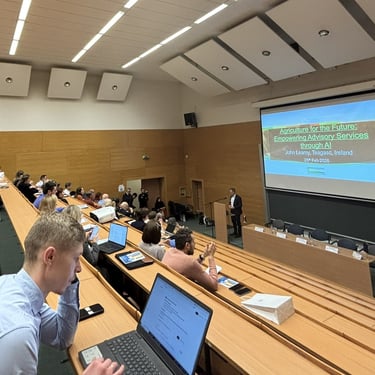
The Thematic Session “Agriculture for the Future: Empowering Advisory Services through AI” highlighted the increasing importance of artificial intelligence in advisory work. Participants discussed new tools that are becoming part of advisors’ daily work and are changing knowledge transfer methods.
Practical experience was shared by John Leamy from Teagasc, who presented the organization’s approach to the use of artificial intelligence in advisory services, including the development of internal AI tools to support advisors.
Dr. Petra Aczél (Széchenyi István University) analyzed the role of artificial intelligence in communication and the optimization of dialogue using language models, as well as the application of AI in agriculture and the technological challenges associated with future shock.
Her colleague Dr. András Ver shared experience on how academic knowledge can be translated into practical agricultural advisory services.
Meanwhile, Tibor Bányai from Gazda Kontroll Kft. emphasised the importance of soft skills in the daily work of advisors.
The day concluded with the internal EUFRAS members meeting, where the achievements of 2025, key events, the financial report, audit results and the 2026 action plan were presented. During the assembly, a new EUFRAS Board was elected. Congratulations to the newly elected Board members — Rui Almeida (Consulai, Portugal), Anita Dzelme (Latvijas Lauku konsultāciju un izglītības centrs, Latvia), Jussi Juhola (ProAgria, Finland), Pablo Asensio (FuAk, Germany), Bernadett Bennett (Teagasc, Ireland), Alexandros Koutsouris (Agricultural University of Athens, Greece) and Sylvain Sturel (Chambres d'Agriculture France, France).
We wish them a successful and energetic term of office!
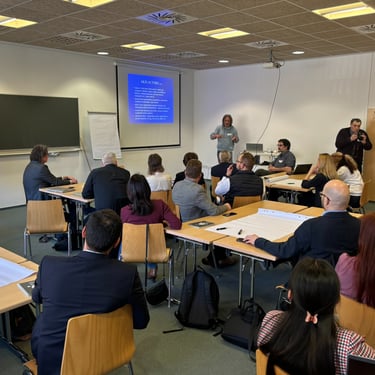
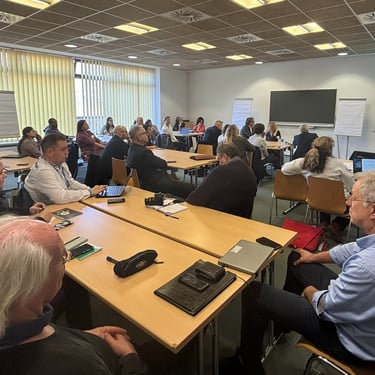
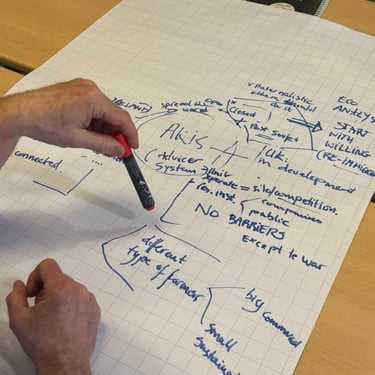
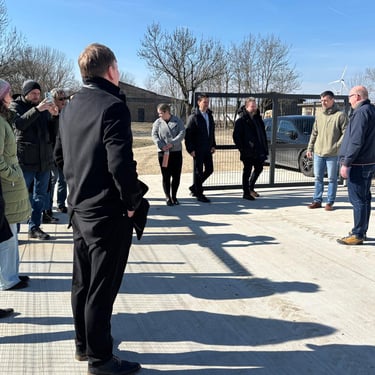
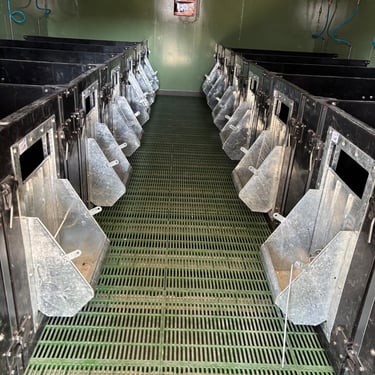
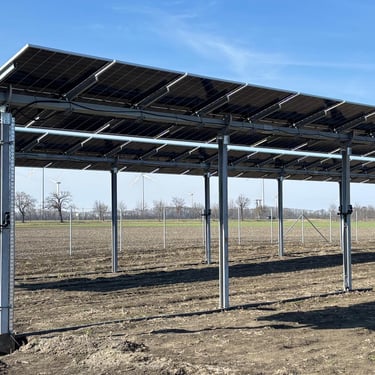
The second day of the assembly was devoted to field visits at the Széchenyi István University Smart Farm, where participants visited four thematic stations — starting with the role of AKIS and advisory systems in knowledge transfer, followed by precision agriculture, robotics and digital technologies, as well as smart livestock and smart crop production integrated with renewable energy solutions. The demonstrations clearly showed how research-based innovations help address sustainability and farm competitiveness challenges.
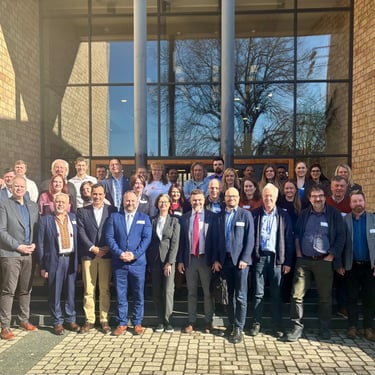
The EUFRAS team sincerely thanks the host organization and all members for their participation, active engagement and ideas for future cooperation. This Assembly once again confirmed that the future of agriculture is based on knowledge, cooperation and innovation!
Day 2 – Field Visits to the Smart Farm
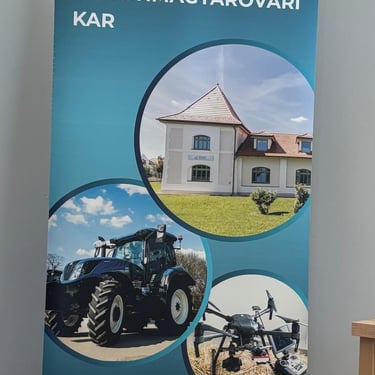
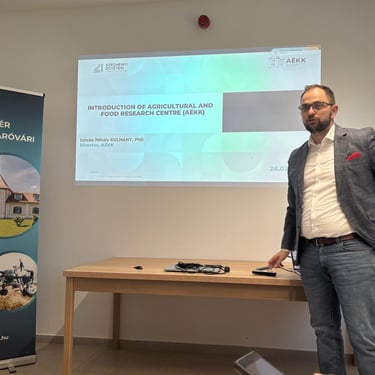
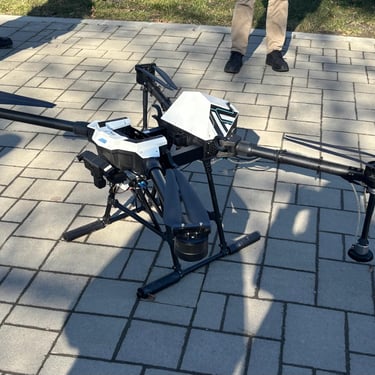
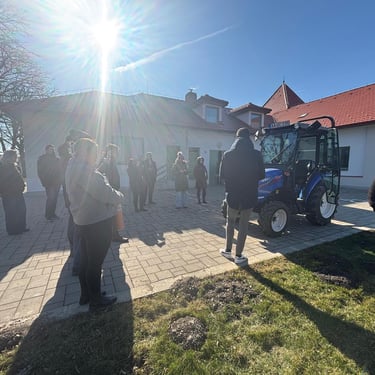
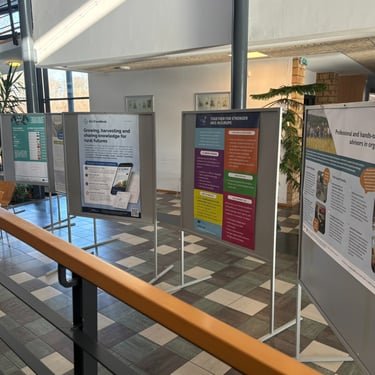
Here you can find the presentations: (Andras Ver; John Leamy; Tamas Toth; Tibor Banyai) of event, and a video showing a drone technology demonstration presented on day 2 of the event during the Smart Farm visit and posters as well.
Riga str 34, Ozolnieki, Jelgavas novads, LV-3018, Latvija
Phone: +371 29736468
mail: anita.dzelme@llkc.lv
Requisites:
Biedrība "Eiropas Lauksaimniecības un lauku konsultantu asociācija"
NGO " European Forum for Agricultural and Rural Advisory Services"
Reg nr. 40008219277